Planet Laboratory
By artist Lily Hunter Green
Funded by Arts Council England
Can we imagine a healthier future where people and nature thrive together?
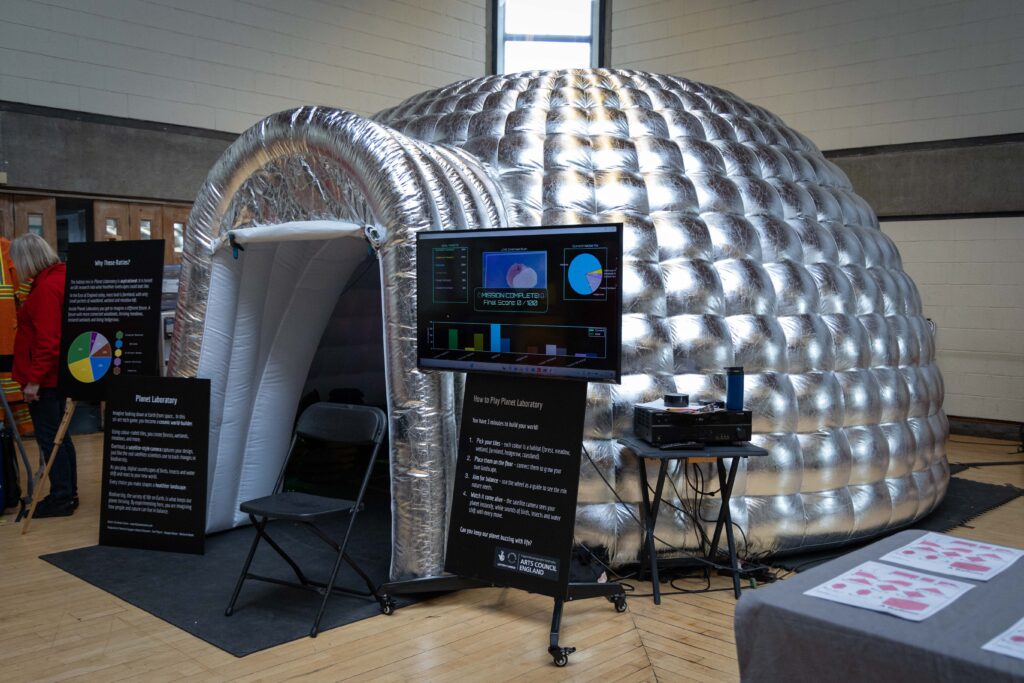
Planet Laboratory is an immersive sci-art-tech experience that transforms the way we see – and hear – our planet. The work invites audiences to step into the role of cosmic world-builders, designing living, breathing landscapes that explore the balance between people, place, and nature.
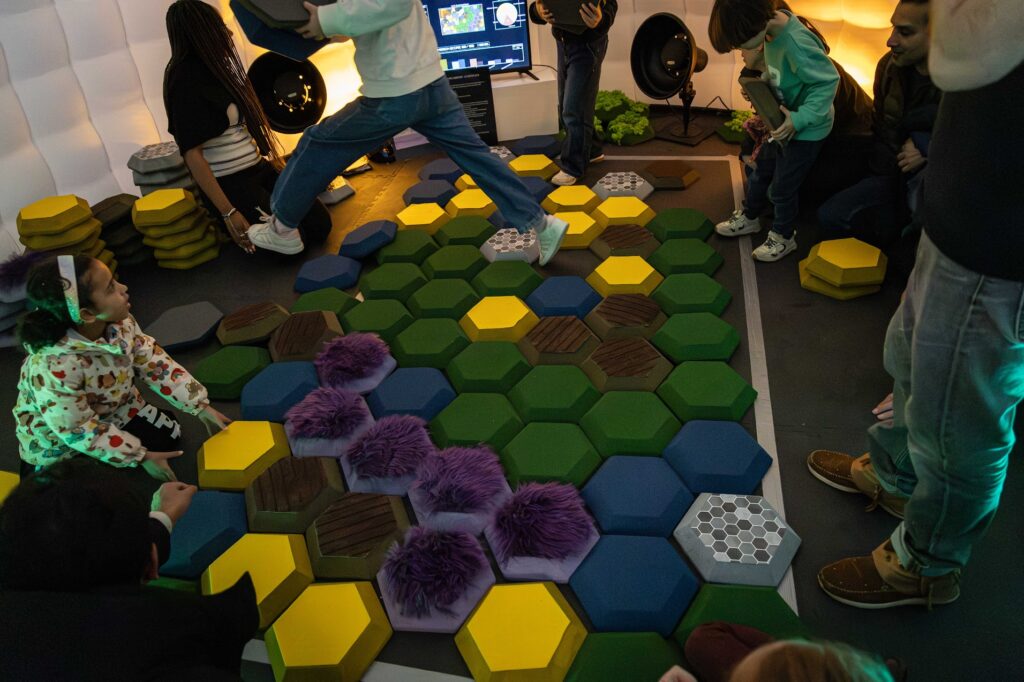
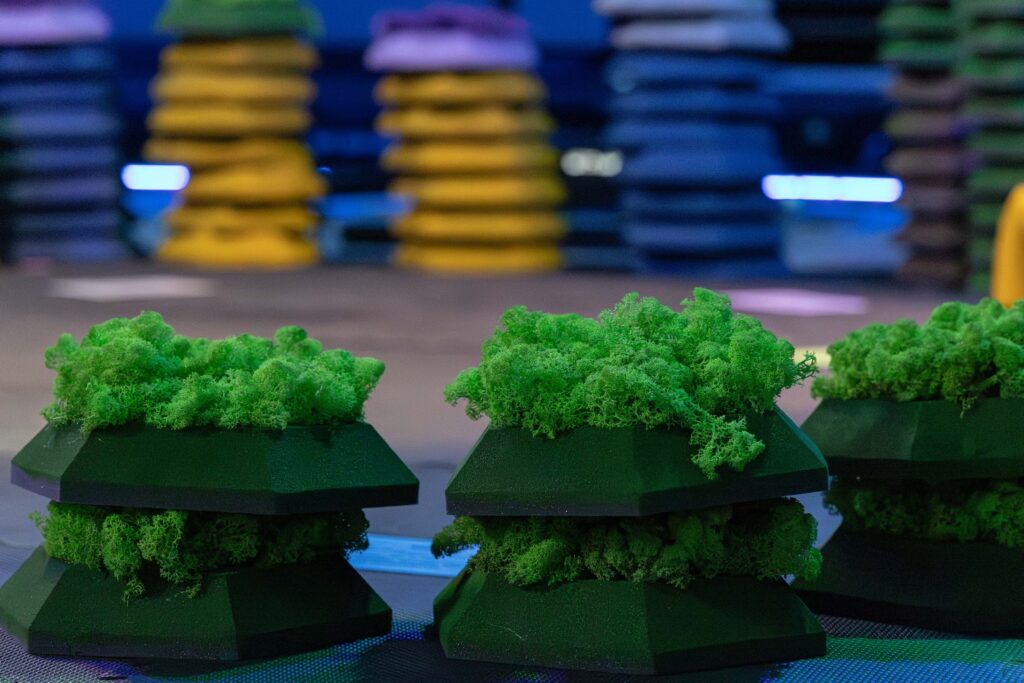
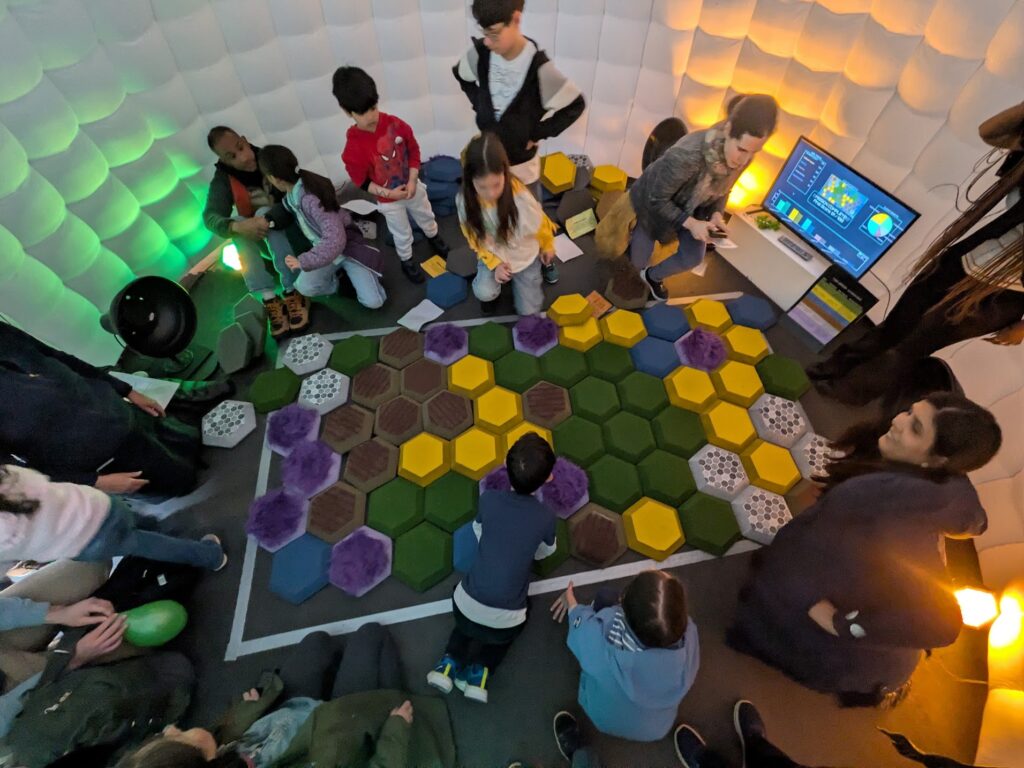
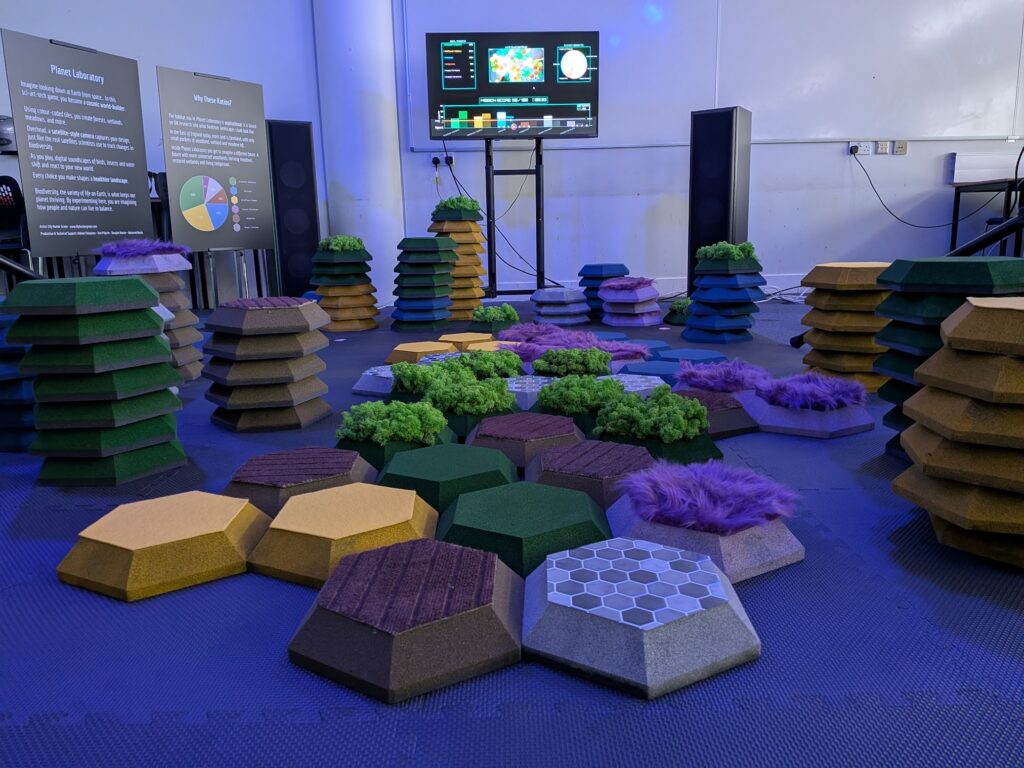
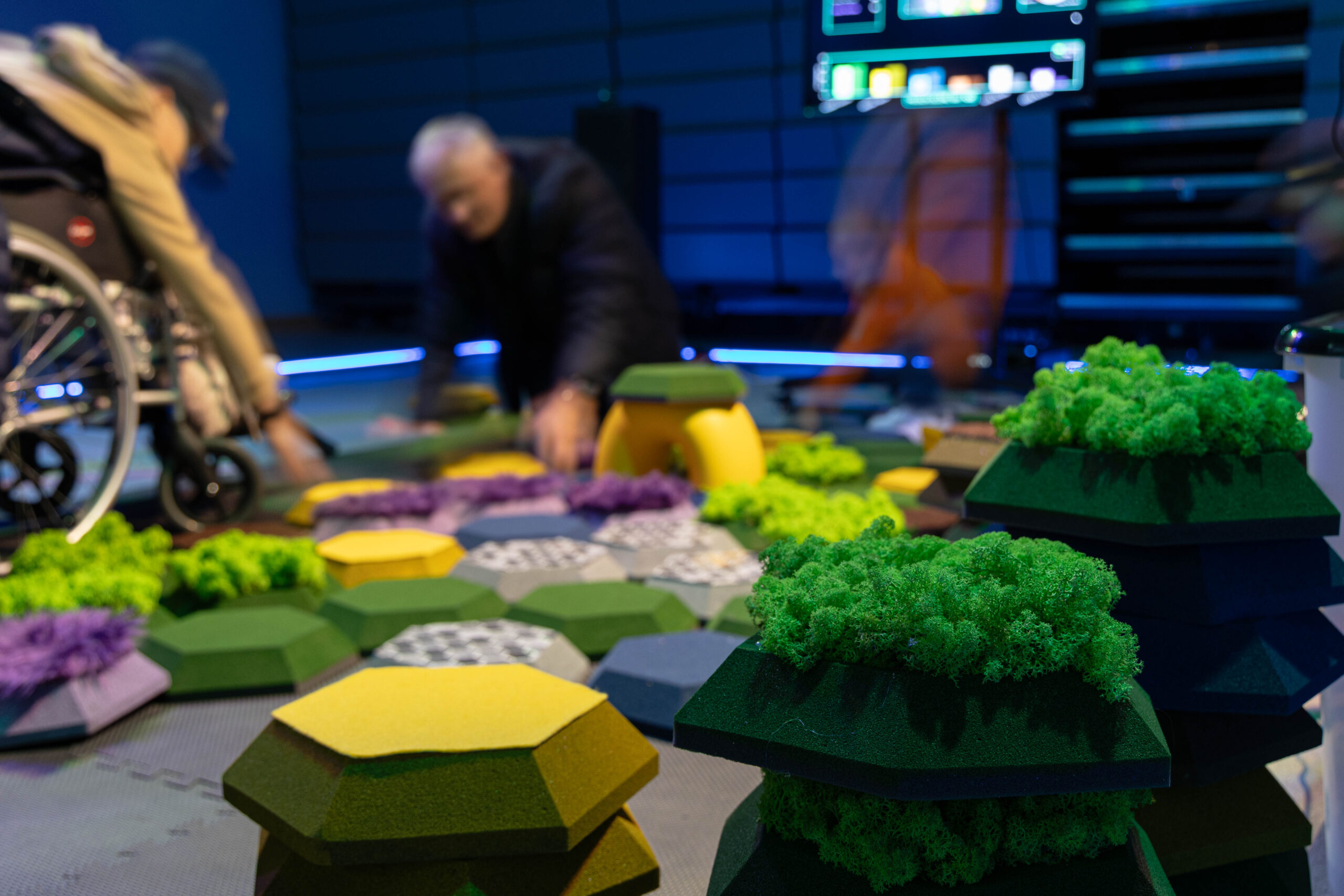
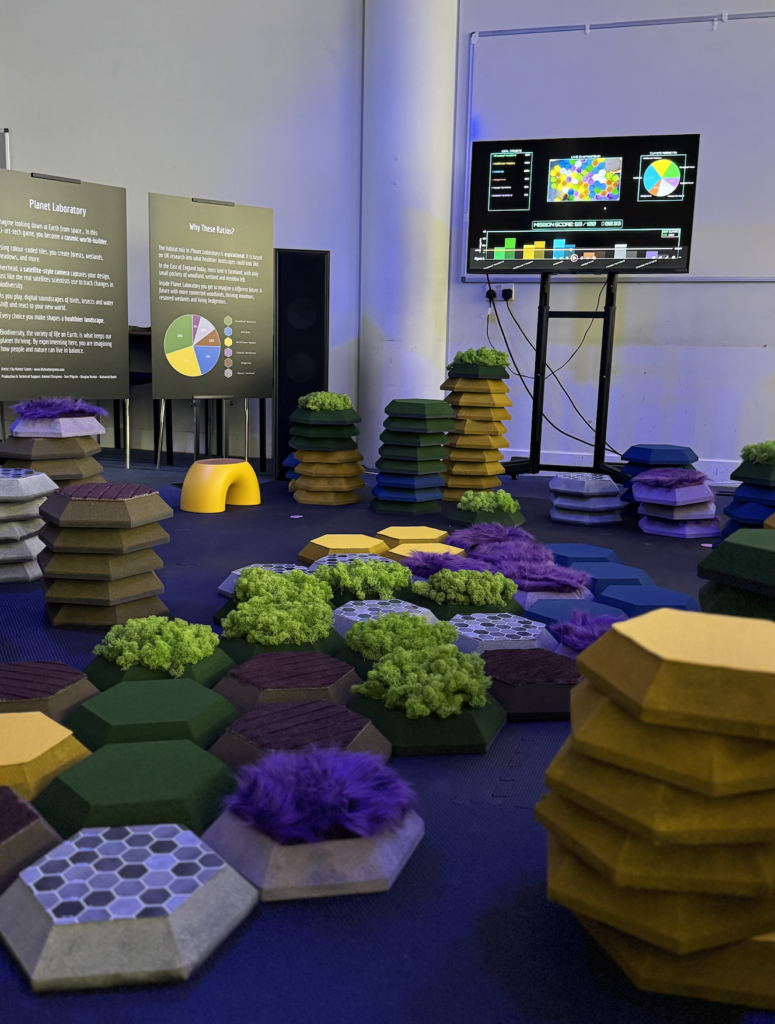
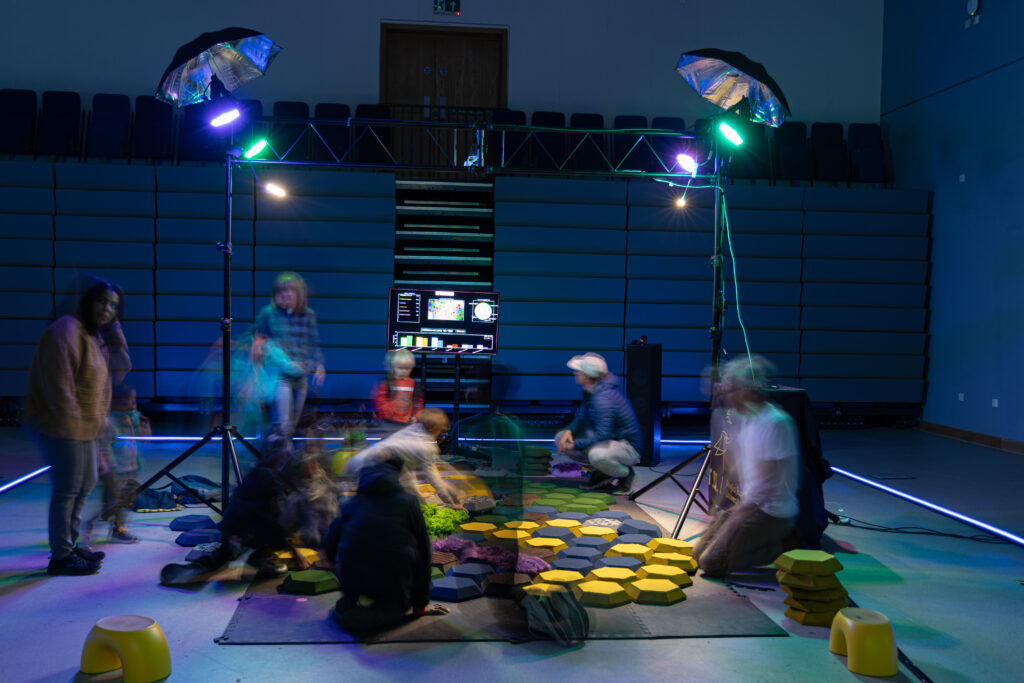
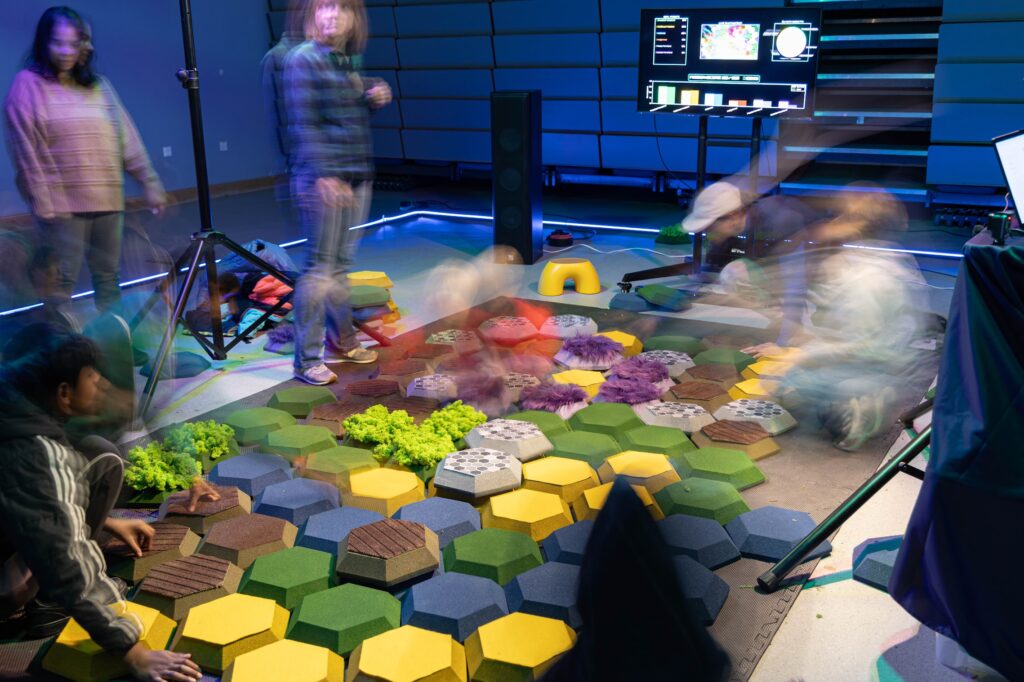
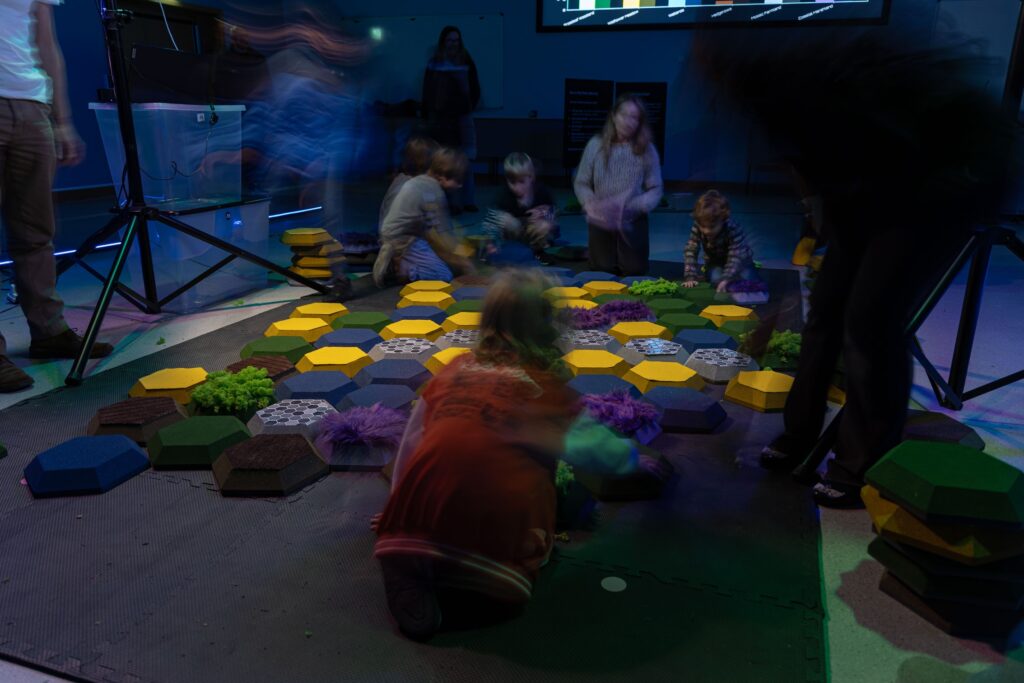
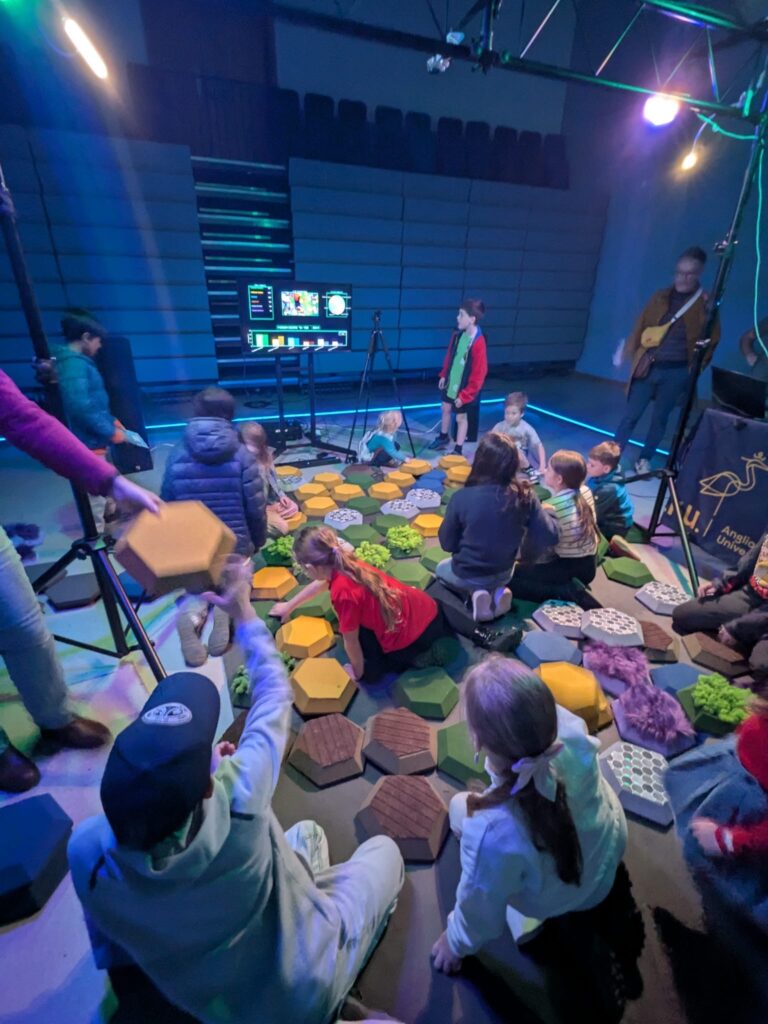
Using colour-coded hexagonal tiles, participants collaboratively assemble woodlands, wetlands, meadows, hedgerows, farmland, and coastlines – constructing a mosaic of interconnected habitats. Each choice shapes the future of their world.
Above, an orbiting ‘satellite-style’ camera observes from space, analysing the colours and patterns below – just like real Earth observation satellites used by scientists to monitor biodiversity and climate change. As the landscape grows, the system interprets the data in real time, giving feedback through both visual and sonic cues.
A Planet That Listens
Sound is at the heart of Planet Laboratory. As habitats shift and balance improves, immersive soundscapes emerge – birdsong from growing forests, buzzing pollinators from flowering meadows, and trickling water from thriving wetlands. The more biodiverse the landscape becomes, the richer and more harmonious its sound world.
This dynamic sonic feedback reveals how sound itself can be a form of environmental sensing – mirroring how scientists use acoustic monitoring to study ecosystem health.
The Technology
Built with custom image-recognition software, Planet Laboratory uses an overhead camera to scan the landscape in real time. The system detects and classifies the habitats by colour, calculating their proportions and ‘biodiversity balance.’ The results appear instantly as a changing score bar and soundscape, helping participants understand how interconnected ecosystems support life on Earth.
Behind its playfulness, the installation mirrors real Earth Observation techniques – where satellites track land-use, habitat loss, and climate resilience through colour, pattern, and texture.
Level 2: Connection and Complexity
In Level 2, Planet Laboratory evolves into a deeper challenge. It’s no longer just about balance, but about connection – how well habitats link together to allow species to move, pollinate, and thrive.
Players experiment with ecological connectivity: woodlands need hedgerows, wetlands benefit from nearby meadows. Bright glowing lines appear where corridors form, showing that life can travel.
- Diverse, connected landscapes → score up
- Monocultures or fragmented areas → score down
This second level introduces systems thinking, encouraging participants to experience how ecological networks – not just individual habitats – make a planet resilient.
Why It Matters
Planet Laboratory blends art, science, and play to help people understand the living systems that sustain us. It offers a new way to experience complex environmental ideas – not through charts or lectures, but through creativity, sound, and collaboration.
It’s both a beautiful simulation and a call to action: reminding us that we are not separate from nature, but part of its design.